What Does a Complete Lightweight Block Factory Include?
A complete block factory needs equipment that works together, enough moulds to keep casting, space for curing and a crew for each production station. HENGDE's 200 m³ two-shift standard proposal provides a concrete example: a horizontal mixer, a two-direction rotary cutting system, 100 required mould sets and a workshop drawing of 80 × 24 m.
How to Start: A Factory Readiness Checklist
Before requesting a complete factory proposal, prepare these inputs. HENGDE reviews them against the intended product and project conditions; final equipment and operating arrangements remain subject to project-specific confirmation.
- Finished block requirements.
Provide intended use, required block dimensions, target density or performance requirements and applicable product specifications, if available. HENGDE uses these to identify the suitable block production route, mould dimensions and cutting needs.
Compare block production lines. - Local raw materials.
Provide sources, supplier details, representative samples or available test reports, and photographs of materials. HENGDE uses them to plan
raw-material assessment, identify trial requirements and evaluate preparation and mixing equipment. - Target output and working schedule.
Provide the intended daily design output and preferred shift arrangements, even if provisional. HENGDE uses these to assess production stages, mould circulation and curing space. Shift assumptions and capacity basis require confirmation for each project. - Site and utilities.
Provide land or workshop drawings, internal clearance, access routes, storage areas and available power, water and compressed-air information. HENGDE uses these for
capacity and layout planning and to identify site interfaces. - Equipment supply boundary.
Provide your expectations for equipment, moulds, handling, controls and customer-supplied works. HENGDE uses this to distinguish proposed supply, optional items and site preparation responsibilities. - Installation and training arrangements.
Provide site-readiness status, local support availability and preferred operator-training needs. HENGDE uses these to coordinate installation interfaces, commissioning prerequisites and training scope with the agreed supply boundary.
Share your available information through
the project enquiry page; missing items can be identified for subsequent review.
200 m³ standard proposal: the production basis
This example uses HENGDE’s square-mould standard proposal with physical foaming. Its 200 m³/day figure describes the designed cutting volume over two shifts totalling 16 hours.
| Planning item | This proposal |
|---|---|
| Working schedule | Two shifts, 16 hours in total |
| Workshop dimensions | 80–100 m long, 20–24 m wide, with a height above 6 m; the illustrated arrangement uses 80 × 24 m, or 1,920 m² |
| Mixing | One EPSJB-01 horizontal mixer, 1.5 m³ mixing volume and a listed 22 kW motor |
| Production mould requirement | 100 sets; each specification includes a mould frame, baseboard and base wheels, nominally 1,200 × 1,200 × 600 mm. Moulds are quoted separately from the listed equipment. |
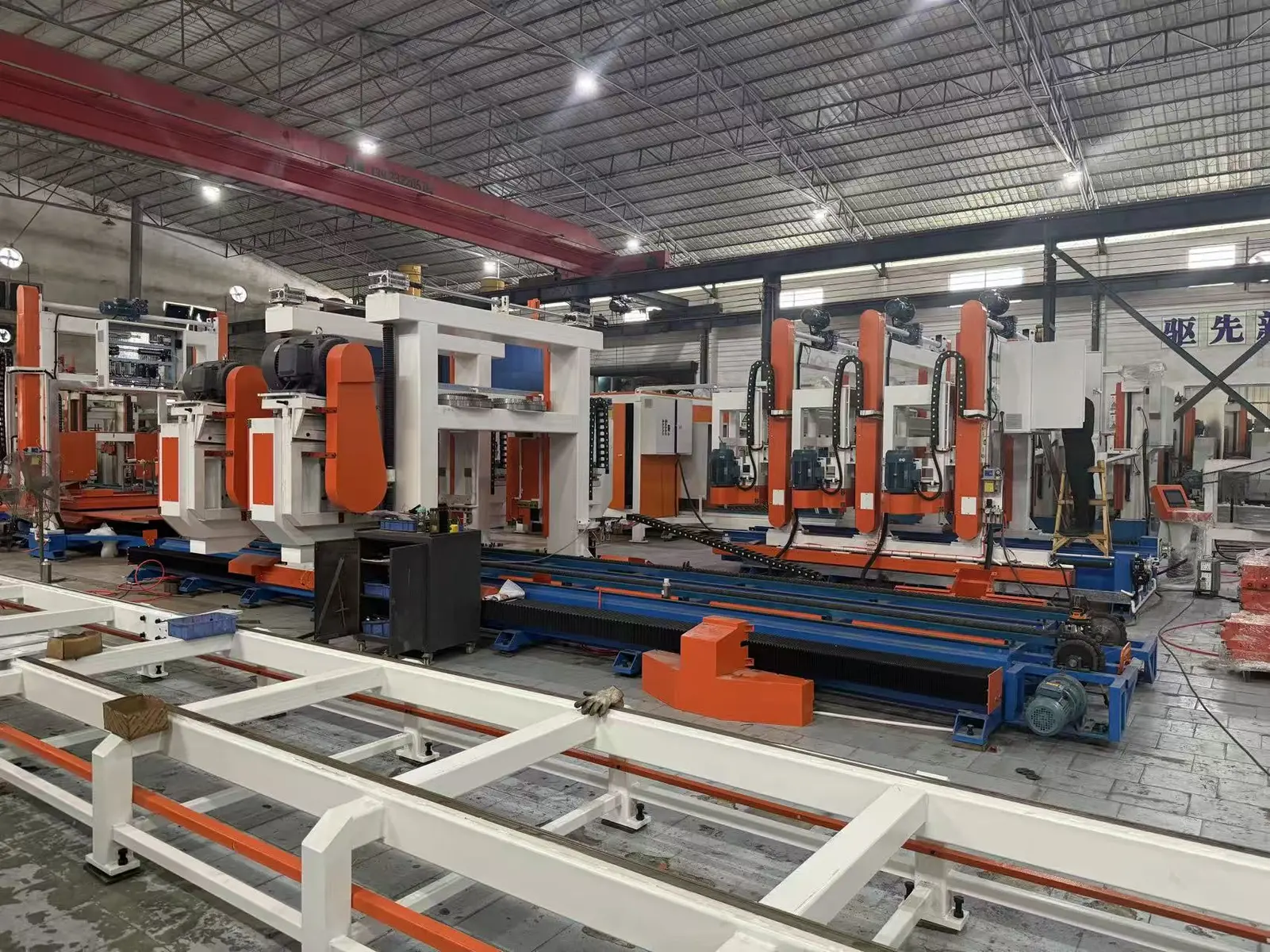
| Cutting | One HDSHM1-001 system with two vertical saw frames and a 90° rotating table, listed at 31.9 kW |
| Production crew | Ten allocated production positions in the detailed staffing plan; finished-product storage and truck loading need separate staffing |
| Listed equipment power | 154.75 kW in the proposal. This is the listed installed equipment power, not electricity consumption per cubic metre. |
The 200 m³ capacity reference page describes a different, one-8-hour casting-shift planning basis. Keep that reference and this 16-hour proposal separate when comparing offers. HENGDE identifies the chosen configuration and working schedule in the factory proposal.
Which equipment connects each production stage?
| Production stage | Equipment in this example | What it does |
|---|---|---|
| Feeding and metering | Screw feeder, belt conveyor, conveyor-linked metering, powder and water metering, minor-material dosing | Prepare and dose the selected inputs before mixing. |
| Foaming and mixing | Physical foaming machine, air compressor and horizontal mixer | Prepare foam and combine it with the metered slurry for the CLC route. |
| Casting and mould circulation | 100 mould sets; pouring, demoulding and mould-return lines; five transfer cars | Move filled moulds to curing, then return cleaned frames and prepared bases to casting. |
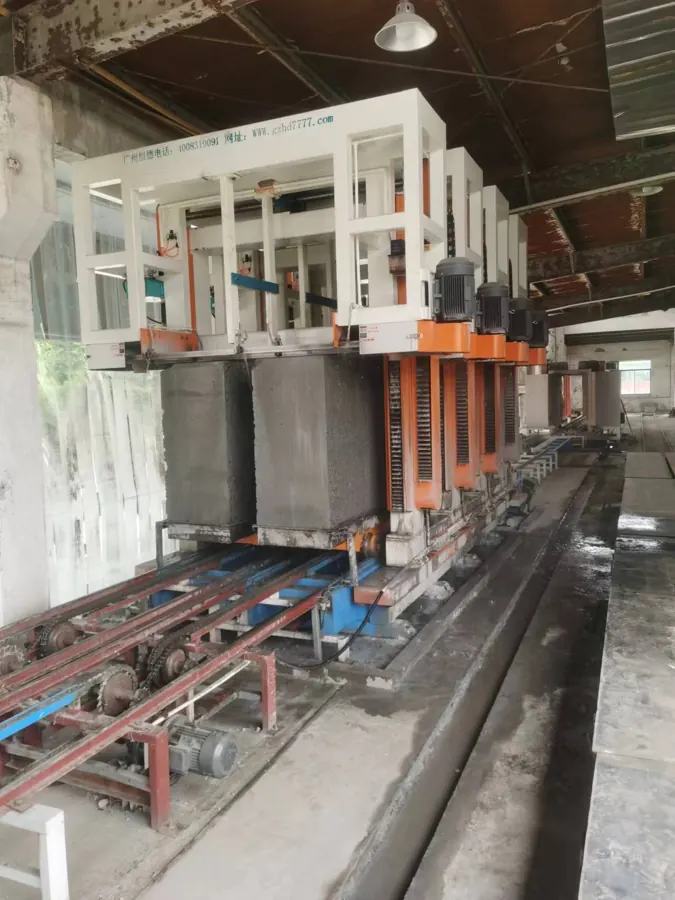
| Demoulding and surface preparation | Demoulding crane, peeling machine and green-body stacking machine | Release the body, trim its upper and lower surfaces and prepare single or stacked bodies for cutting. |
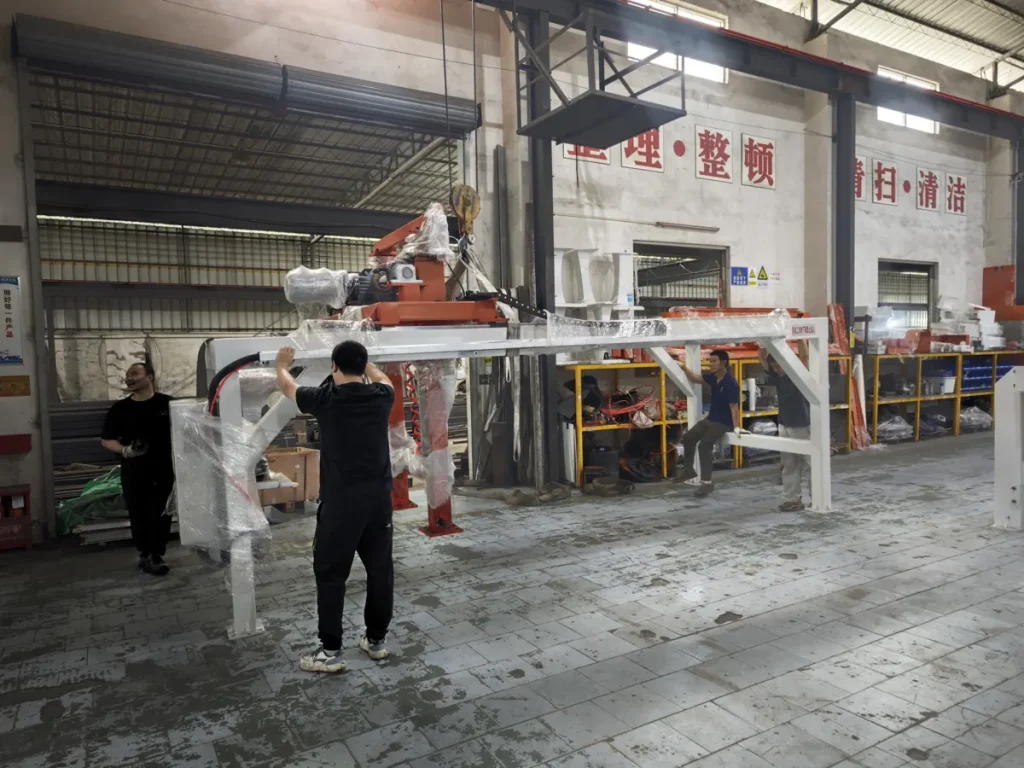
| Cutting | Two-direction vertical saw system with rotating table; two powered feed lines and two discharge lines | Complete the first cutting direction, rotate the body 90° and complete the second direction. |
| Palletizing and packing | Mechanical palletizer | Move cut products from the mould base to pallets. The standard version uses manual strapping and wrapping; the illustrated automatic packing stage is an optional addition. |
| Controls | Main control cabinet, foaming control cabinet and remote module | Control the supplied equipment. Remote operation uses an internet connection and site authorization. |
A mixer and cutter alone leave gaps between production stages. The mould-return circuit lets casting continue while other bodies cure. Feeding and discharge equipment connect the cutter to the surrounding process. HENGDE designs these interfaces on the line layout rather than leaving the customer to assemble an equipment list into a factory.
What workshop and site preparation does the buyer need?
The 80 × 24 m drawing gives a workshop arrangement of 1,920 m². It does not state the total land requirement. Raw-material receiving, finished-product storage, vehicle circulation and loading also need locations on the site plan.
| Area or interface | What to put on the factory drawing |
|---|---|
| Production workshop | Actual internal length, width and height, column positions, doors and the route for installing the largest equipment. |
| Mould and curing circulation | Filled-mould parking, demoulding access, cleaned mould return and routes for the transfer cars. |
| Product storage and loading | Pallet storage, movement to subsequent curing or dispatch, and truck access separated from machine operation. |
| Foundations and utilities | Equipment foundations and fixing points, electrical distribution, water connection and the services specified on the installation drawings. |
| Local installation preparation | The building works and customer-prepared materials on HENGDE’s site-preparation list, ready before the installation team arrives. |
Send an existing workshop drawing to our factory and capacity planning team. We can assess the usable space against the selected line arrangement and identify the building work needed before installation.
How are the ten production positions allocated?
| Station | Positions | Work |
|---|---|---|
| Mixing platform | 1 | Metering, mixing and mould filling through the control cabinet. |
| Filled-mould transfer | 1 | Move cast moulds toward the curing area. |
| Curing-area assistance | 1 | Organize mould positions and bring bodies ready for demoulding to the next station. |
| Demoulding and mould assembly | 3 | Release frames, clean them and assemble them with the next prepared bases. |
| Peeling and body stacking | 2 | Trim body surfaces and prepare stacked bodies for the cutter. |
| Cutting and palletizing | 2 | Operate the cutting controls and palletizer. |
The proposal’s summary gives 8–10 workers; the table uses its detailed ten-position plan. Budget separately for two-shift coverage, breaks, maintenance, yard storage and loading rather than treating ten positions as the factory’s total payroll.
Why do cutting condition and production rhythm matter?
The proposal includes the following manufacturer-test cutting times. These are cutting-time observations for the stated body-strength ranges, not a complete factory-output test or a customer-site guarantee.
| Body strength in the test | Single body | Two stacked bodies |
|---|---|---|
| 0.8–1.2 MPa | 3 min 30 sec | 5 min 30 sec |
| 1.3–1.7 MPa | 5 min 30 sec | 8 min |
| 2.0–2.5 MPa | 9 min | 12 min |
| 3.0–3.5 MPa | 12 min | 18 min |
These results show why the mould, curing and cutting plan belongs in the same proposal. The equipment sequence must deliver bodies to the saw at the required cutting condition. HENGDE combines the machine configuration with material trials and operator training to establish that sequence.
Why can two 200 m³ offers have different supply scopes?
| Offer item | Comparison to make before ordering |
|---|---|
| Capacity basis | Compare shifts and hours, casting basis, cutting volume and the finished-product checks used in the proposal. |
| Moulds | This standard proposal requires 100 mould sets, quoted separately from the equipment amount. Compare total mould quantity and baseboards rather than a drawing of one reference mould. |
| Handling and controls | Identify the transfer cars, return lines, powered feeds, palletizer and control cabinets included in each offer. |
| Packing | The standard version uses manual strapping and wrapping. Identify any optional automatic packing stage and the locally supplied consumables. |
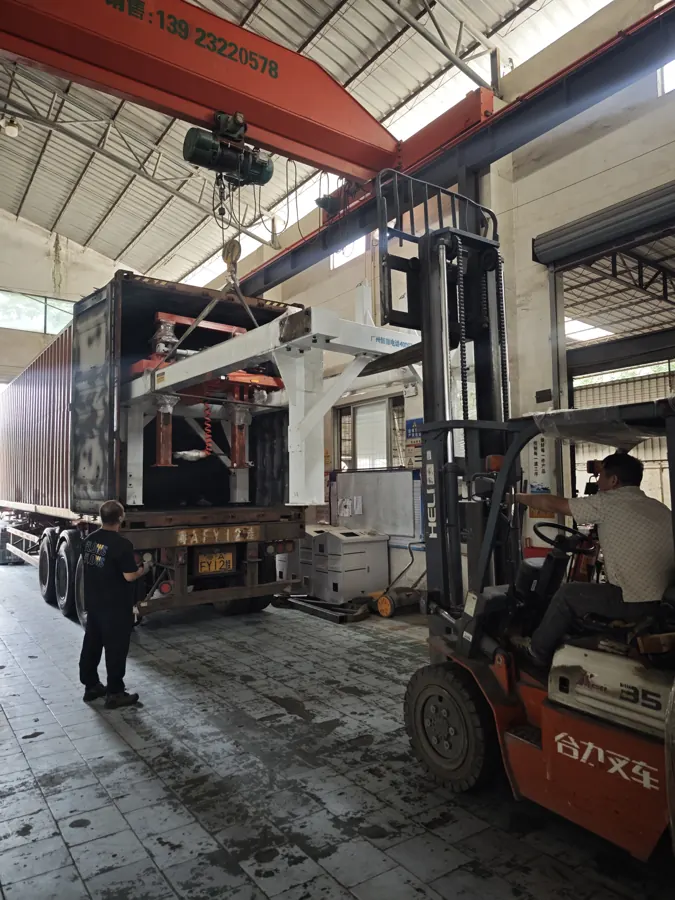
| Shipping | Freight is separate from the listed equipment amount. Compare container types, ocean freight and destination handling. The example proposal lists one 40-foot open-top container and one 40-foot standard container; added equipment changes the packing plan. |
| Installation and training | Identify the engineer’s work, local labour, travel and service arrangements, and the customer-prepared facilities. |
HENGDE gives the buyer an equipment schedule and layout for the selected scope. Compare machinery, mould quantity and local preparation on the same basis before comparing the quotation total.
Real factory experience and the next step
See the Albania 100 m³ foam-concrete block project for real operating-line photographs. It demonstrates an installed CLC system at a different capacity. The 200 m³ example in this guide comes from the standard proposal, rather than from a claimed 200 m³ result at that site.
Compare the CLC production route, the block-line capacity range and our installation and operator training service. The factory and site acceptance checklist explains the records that accompany equipment delivery and site trials.
Get the equipment scope and workshop preparation plan
Send your project country, required block sizes, raw materials, shift plan and workshop drawing. HENGDE will prepare the appropriate equipment scope, mould arrangement and site-preparation requirements for your factory.