
 REAL RETROFIT-SITE PHOTO
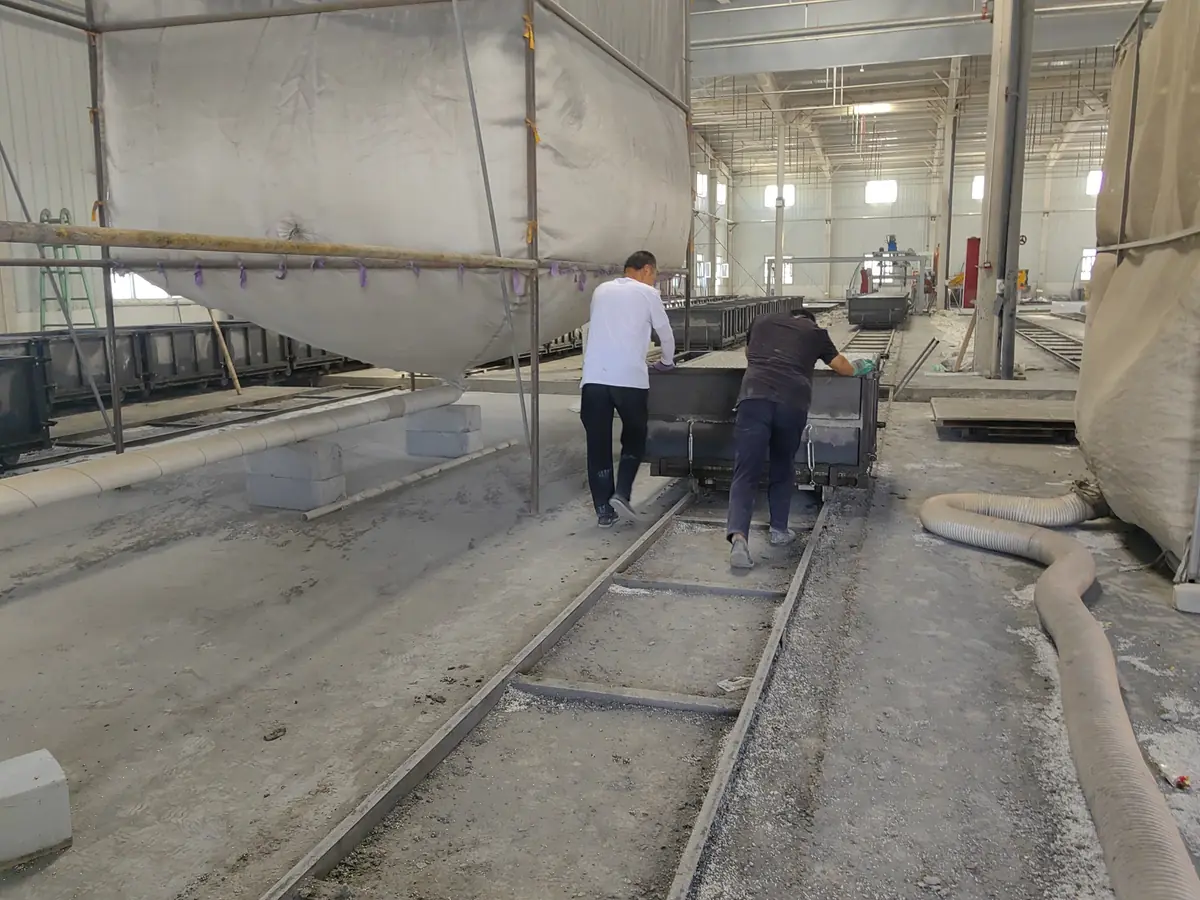
Mould-rail operation
Moulds move along the retained rail route in the customer factory.
This Aksu customer selected a simplified 100 m³/day self-insulating-block configuration. HENGDE focused the equipment scope on the required production functions and selected automation around the customer’s initial investment plan.
 REAL RETROFIT-SITE PHOTO
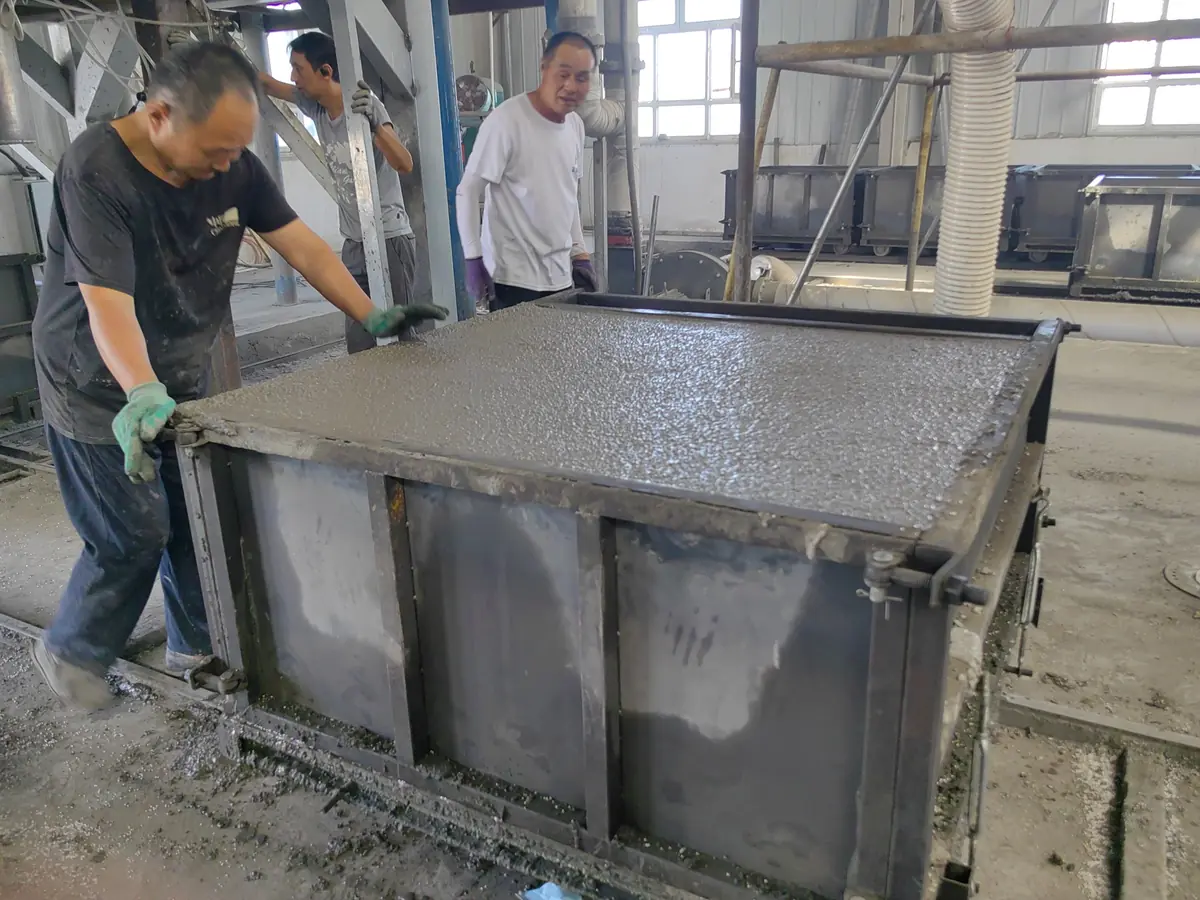
Moulds move along the retained rail route in the customer factory.
REAL PROCESS PHOTO A separate image records material and mould preparation within the simplified configuration.
 REAL LINE PHOTO
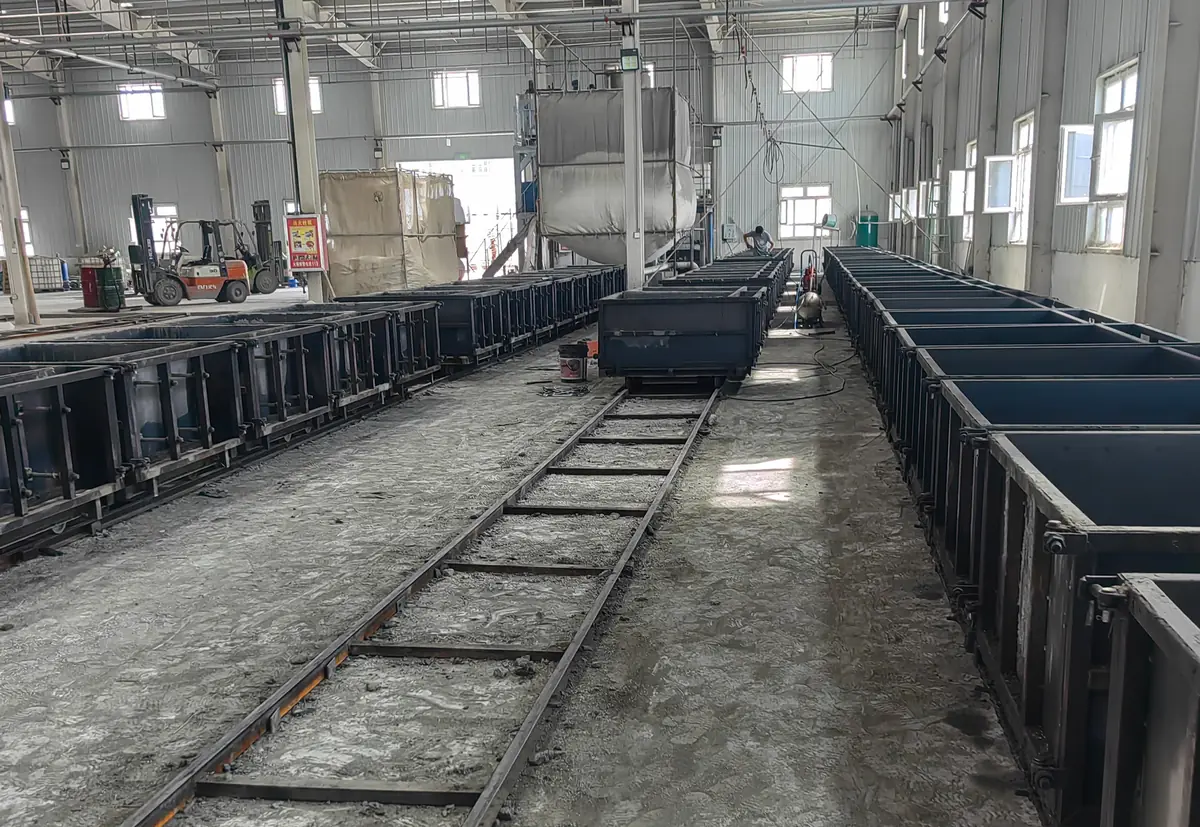
The customer-site media shows the mould line and existing factory rails used by the retrofit.
To reduce the customer’s initial equipment investment, this simplified proposal omits automatic demoulding and automatic palletizing. Demoulding, transfer and stacking still need to be covered by the retained equipment and factory operating plan. When comparing a simplified and an automated proposal, identify who performs each task and which machines are included. HENGDE defines the retrofit scope around the existing factory and the target self-insulating block product.
Prepare your existing-equipment list, mould dimensions, factory layout and target block dimensions. These inputs help define retained equipment, new machines and site responsibilities.
Review the product route, material preparation and equipment stages before choosing a retrofit scope.
02The six-metre existing AAC-line retrofit is a different project. Its mould length and equipment scope are not part of this simplified 100 m³/day configuration.
03Plan the retained rail route, material movement and the interfaces between existing and new equipment.
04Tell HENGDE your project location, current equipment and target product to discuss the scope for your factory.