A Product Brief for Customers Entering Lightweight Block Manufacturing
Your first equipment inquiry should describe the block you intend to sell. HENGDE uses that product brief to select the process, moulds, cutting arrangement and factory layout. A useful brief names the wall application, sizes, performance targets, local materials and working schedule, so the equipment proposal answers a manufacturing requirement instead of offering a generic collection of machines.
Start with the buyer’s wall product
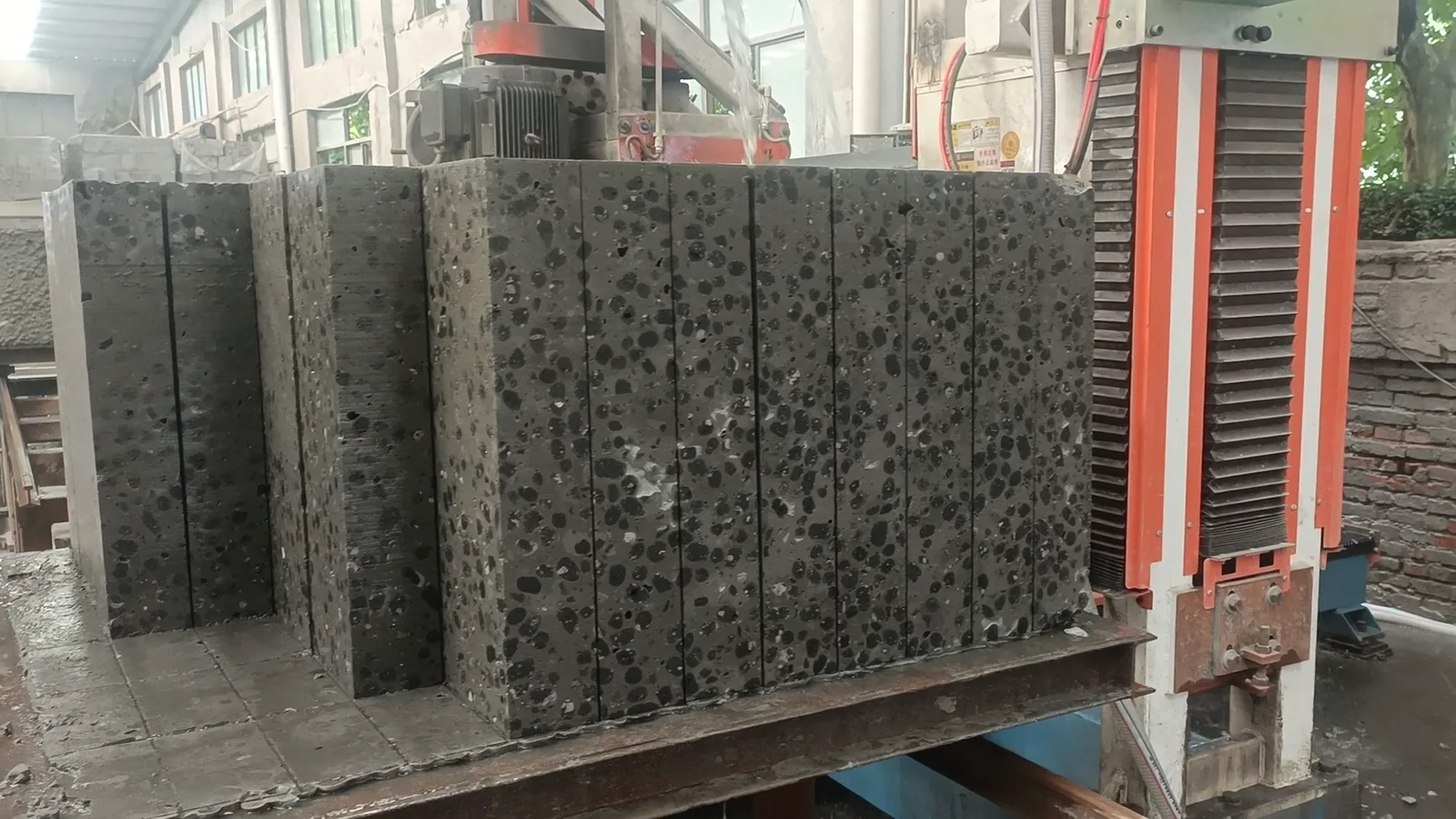
Identify who will buy the blocks and how they will use them. A non-load-bearing partition, an external infill wall and a thermal-insulation product can have different requirements. Obtain the product specification and applicable test methods from the intended market. Keep those requirements separate from a machine brochure’s description of what it can cut.
Confirm the sizes customers actually order and the installation method they expect. Ask whether the wall uses mortar, adhesive or another specified system, and whether surface finish and dimensional consistency affect that choice. These answers guide the mould geometry, cutting sizes and product checks.
| Brief item | Useful information to send HENGDE | Equipment decision it supports |
|---|---|---|
| Application and product | Block or panel, wall use and a sample or product drawing | Choose the production family and process route |
| Size range | Finished dimensions and expected orders for each size | Select moulds, saw paths and changeover arrangements |
| Performance | Density basis, strength requirements and local test methods | Define material trials and product inspection |
| Materials | Supplier, material identity, available quantity and representative samples | Plan feeding, metering, mixing and raw-material assessment |
| Output and site | Working hours, intended output, workshop drawing and utilities | Balance production stages, storage and site preparation |
A worked example: dimensions change the production question
Consider an illustrative partition block of 600 × 200 × 100 mm. Its geometric volume is 0.012 m³. An ideal 100 m³ of that size corresponds to about 8,333 blocks before cutting losses, damaged pieces and rejected product. At an illustrative dry-density target of 600 kg/m³, its calculated dry mass is 7.2 kg before accounting for actual product moisture and packaging.
Changing the thickness to 150 mm raises the geometric volume to 0.018 m³ and the calculated dry mass to 10.8 kg at the same density. The number of pieces per nominal cubic metre falls, while handling and pallet loading change. Those calculations describe an example product brief, not tested HENGDE product performance.
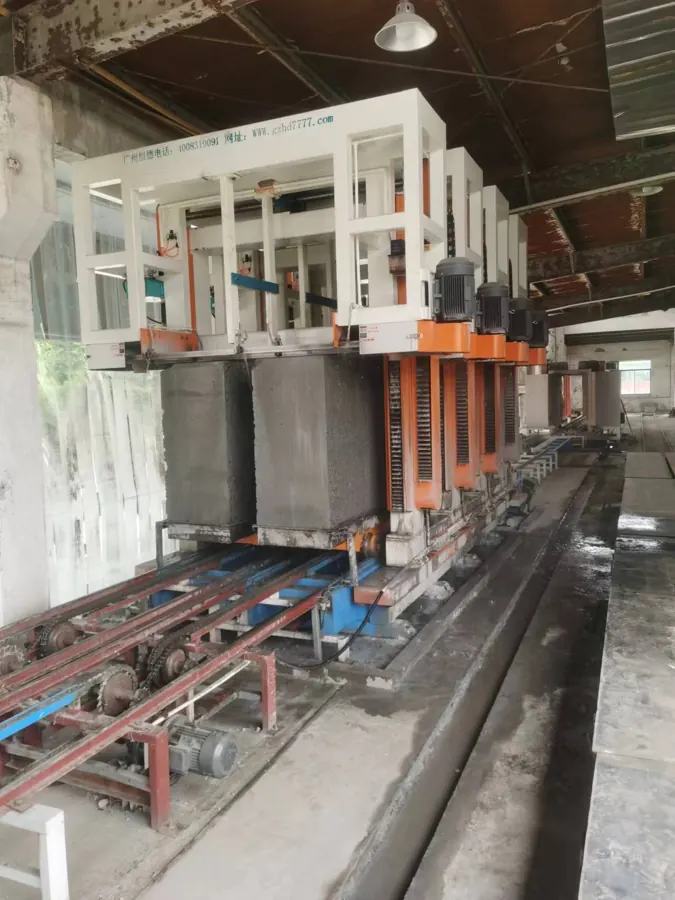
This is why HENGDE asks for dimensions and density as well as cubic metres per day. The mixer handles the batch, moulds carry bodies through initial curing, the cutter creates the selected sizes and the palletizer handles their weight and arrangement. Each stage must support the same product plan.
Choose the process using the product and local materials
In a physical-foaming CLC line, the foaming machine prepares foam before it mixes with the slurry. Chemical aeration develops gas through a reaction in the material. Separately, the chosen curing route determines whether the system uses non-autoclaved curing or an autoclave-based process. These are different decisions, not interchangeable names for one machine package.
Send representative local cement and filler information for raw-material assessment. Include supplier and batch identity, moisture information where available and the quantity you expect to obtain regularly. HENGDE connects the material trial with mixing, casting and cutting requirements. A material sharing the same name as one used at another factory does not automatically have the same characteristics.
Define output so two proposals can be compared
Write the shifts and hours beside the requested daily output. State whether the figure refers to cast volume, cut product or accepted finished blocks. Include the product sizes and the inspection requirements used to release finished stock.
For example, the 200 m³ capacity reference uses an eight-hour casting-planning basis. The separate two-shift standard proposal example describes design cutting volume over 16 hours. HENGDE specifies the selected configuration and schedule in the project proposal so the comparison uses the same basis.
Turn the brief into a factory proposal
Send the product drawing and material information first, even if some site details are still being decided. Mark the decisions you need help making. HENGDE develops the next steps into a material-trial plan, equipment scope and workshop arrangement, with the facilities the customer prepares before installation.
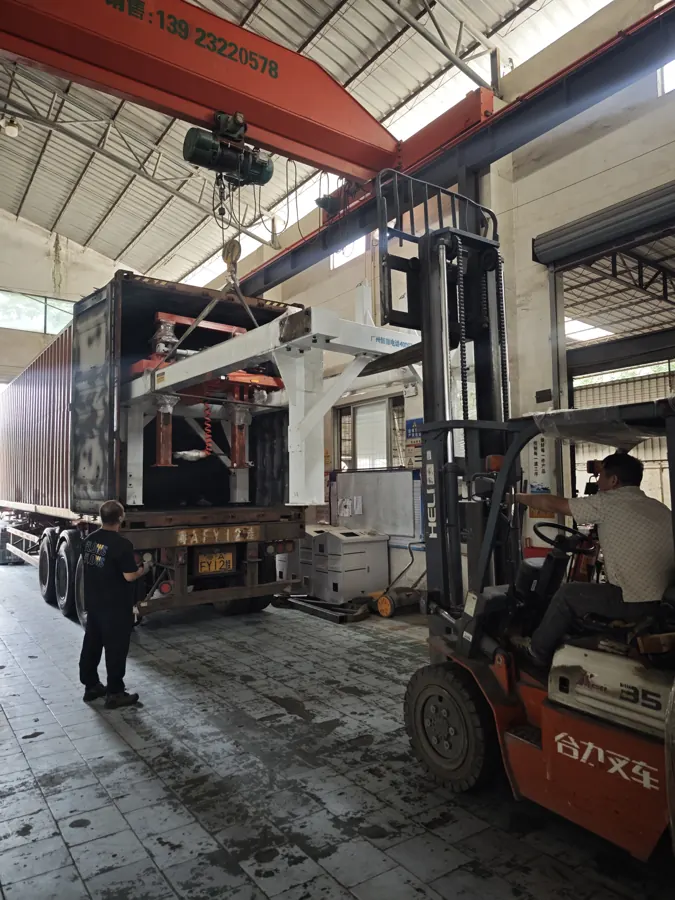
The Yuyao AAC-to-ceramsite block-line upgrade shows a real example of equipment integration for a different block product. It helps illustrate why product selection comes before choosing a cutting and handling configuration.
Send Your Product Brief to HENGDE
Tell us the block sizes, wall application, project country and planned shifts. Add material suppliers and your workshop drawing, and we will develop the appropriate production-line configuration.