How to Test a Block Cutting-Line Product Changeover
A block-size change affects the cutter, product inspection and the equipment that handles the finished blocks. HENGDE plans the trial around that complete transition, from the last accepted old-size block to the first accepted new-size block, so a factory can schedule mixed orders using a useful changeover time rather than the time needed to select a setting on a screen.
What changes when the customer orders a new size?
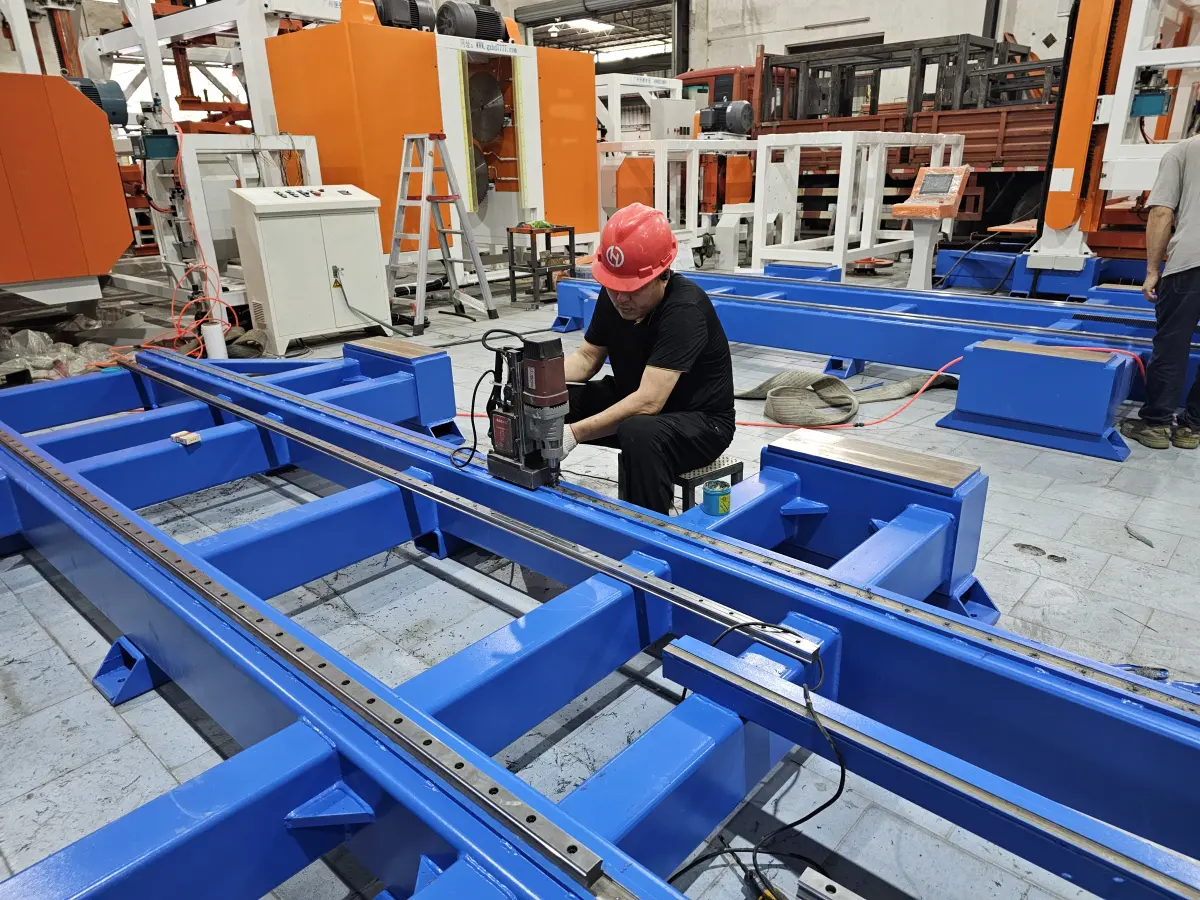
Write the old and new length, width and height beside the cutting orientation. Identify which dimensions come from the mould and which come from the saw paths. A product change can require a different control setting, tooling position, body orientation or handling arrangement. The supplied machine configuration determines the actual procedure.
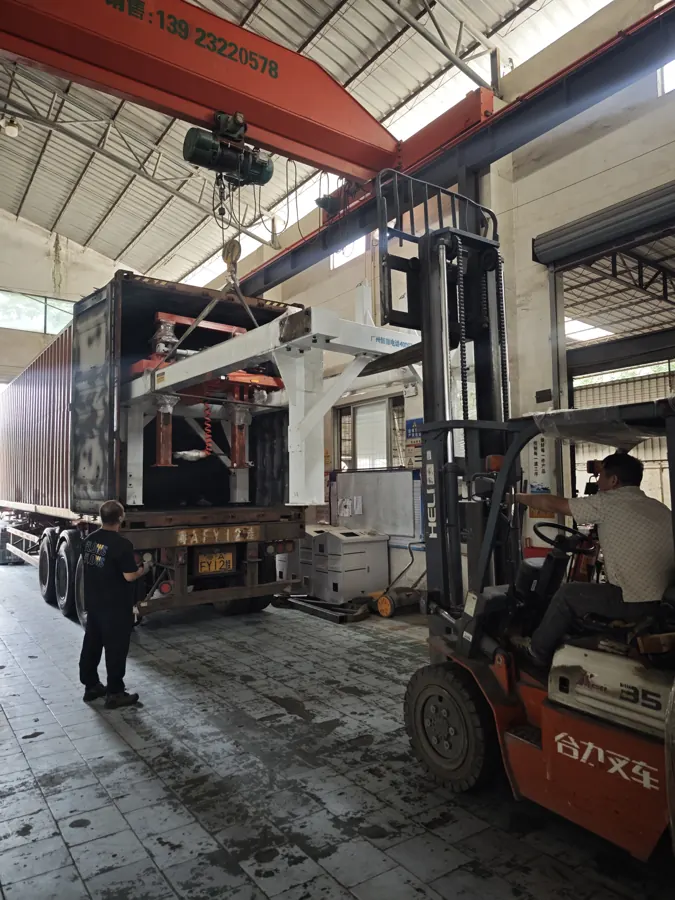
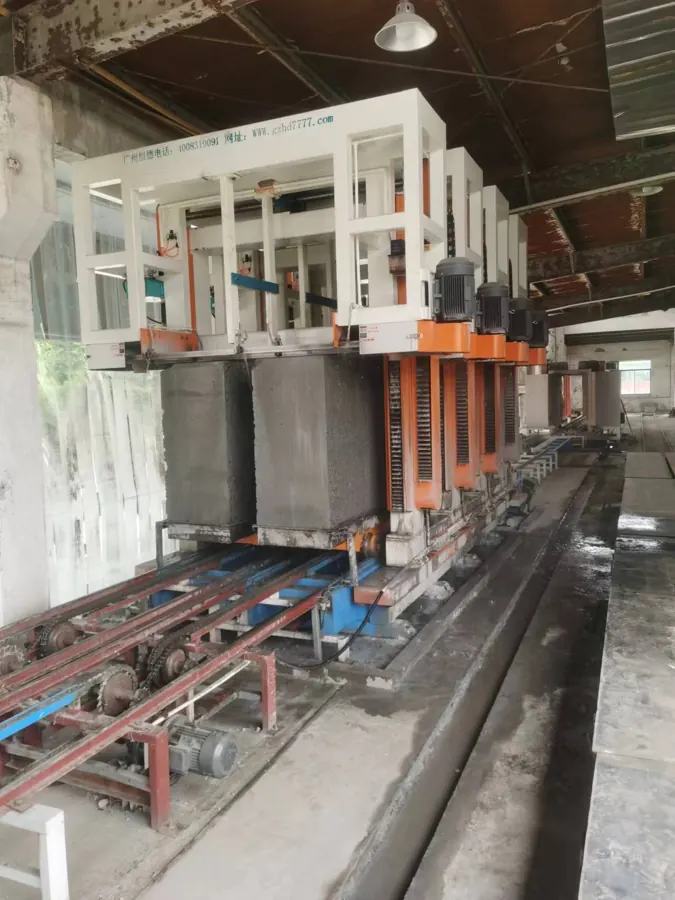
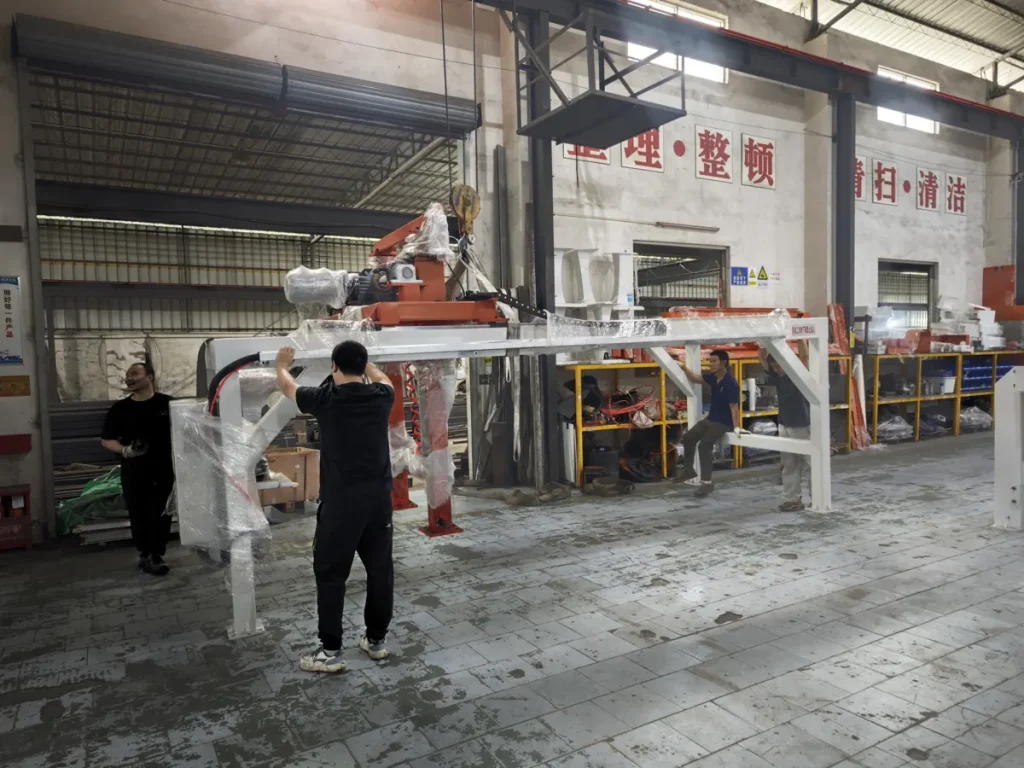
For example, HENGDE’s HDSHM1-001 system in the two-shift standard proposal has two vertical saw frames and a 90° rotating table. It cuts one direction, rotates the body and completes the second direction. A trial on this arrangement must confirm both directions and the product leaving the discharge line. It cannot rely on a first-direction sample alone.
Send the intended size range when choosing a CLC block line. HENGDE reviews the cutting arrangement together with moulds, peeling, body transfer and palletizing. This makes the changeover part of equipment selection before the factory starts taking mixed orders.
The full changeover clock
Start the clock at the last accepted old-size product. Stop it when inspection accepts the first new-size product and the downstream equipment can handle it. Record the activities within that interval so the team can distinguish preparation, adjustment and first-product losses.
| Activity | Illustrative duration | What the result includes |
|---|---|---|
| Safe stop and preparation | 3 minutes | Apply the machine’s approved stopping and isolation procedure |
| Required settings and mechanical adjustment | 7 minutes | Complete the configuration-specific tasks with the correct tools |
| Restart checks and trial cut | 5 minutes | Check the authorized operating sequence and make the trial product |
| Inspection and downstream confirmation | 3 minutes | Accept the new dimensions and confirm transfer and palletizing |
This hypothetical example totals 18 minutes. It is a timing illustration, not a measured HENGDE machine result. A two-minute control-setting operation inside that interval would still leave 18 minutes unavailable for normal production. For an eight-hour shift, three such changes would occupy 54 of 480 scheduled minutes before other stoppages.
How to make the first new-size product a useful check
Label the trial body with its batch and curing condition. Keep that information with the machine settings, because a softer or harder body can change cutting behaviour. Measure finished length, width and height using the agreed method. Check several positions across the cut body rather than choosing only the best-looking block.
Record chipped edges, damaged corners and pieces that need recutting. Check the cutter’s positioning and tool condition when a dimensional error repeats in the same direction. If damage appears during transfer rather than sawing, investigate support, clearances and handling before changing the cutting recipe.
Confirm that the palletizer grips or supports the new product correctly, pallets fit the arrangement and the packing team can complete the required bundle. The first acceptable cut is only part of the transition if the next station cannot receive it.
Preparation that shortens the interruption
Prepare the approved size recipe, tools, measuring equipment and suitable pallets before stopping production. Keep a verified old-size setup available for recovery. Operators must follow the supplied manual and isolation rules when a task requires access to moving or energized equipment.
During commissioning, repeat representative changes with the trained operating team. Include the common change in both directions: a change from size A to B may involve different tasks from B back to A. Record elapsed time, people involved and trial losses. Use those results to group similar orders into sensible production runs.
What to discuss with HENGDE before ordering
Provide your block-size range, expected orders per size and the current mould and cutting arrangement. Ask which changes the proposed equipment makes through controls and which require mechanical work. HENGDE connects that answer with inspection, product transfer and the planned shift output.
See the Yuyao cutting and line-upgrade project for real equipment integration photographs. Our commissioning and operator-training service prepares the operating team to use the selected machine procedures and document accepted settings.
Plan Your Block-Size Range Before Buying the Cutter
Send the sizes you want to sell and your expected order mix. HENGDE will review the cutting configuration and the associated mould, handling and changeover requirements.