What Should a Lightweight Block Factory Record on Every Shift?
A shift report should explain where production went and what the next team must do. HENGDE separates casting, work in progress, inspected blocks and dispatch stock, then connects them with batch IDs. That makes the record useful for improving output, locating a process change and asking for technical support—not merely counting filled moulds.
Keep the batch identity through every station
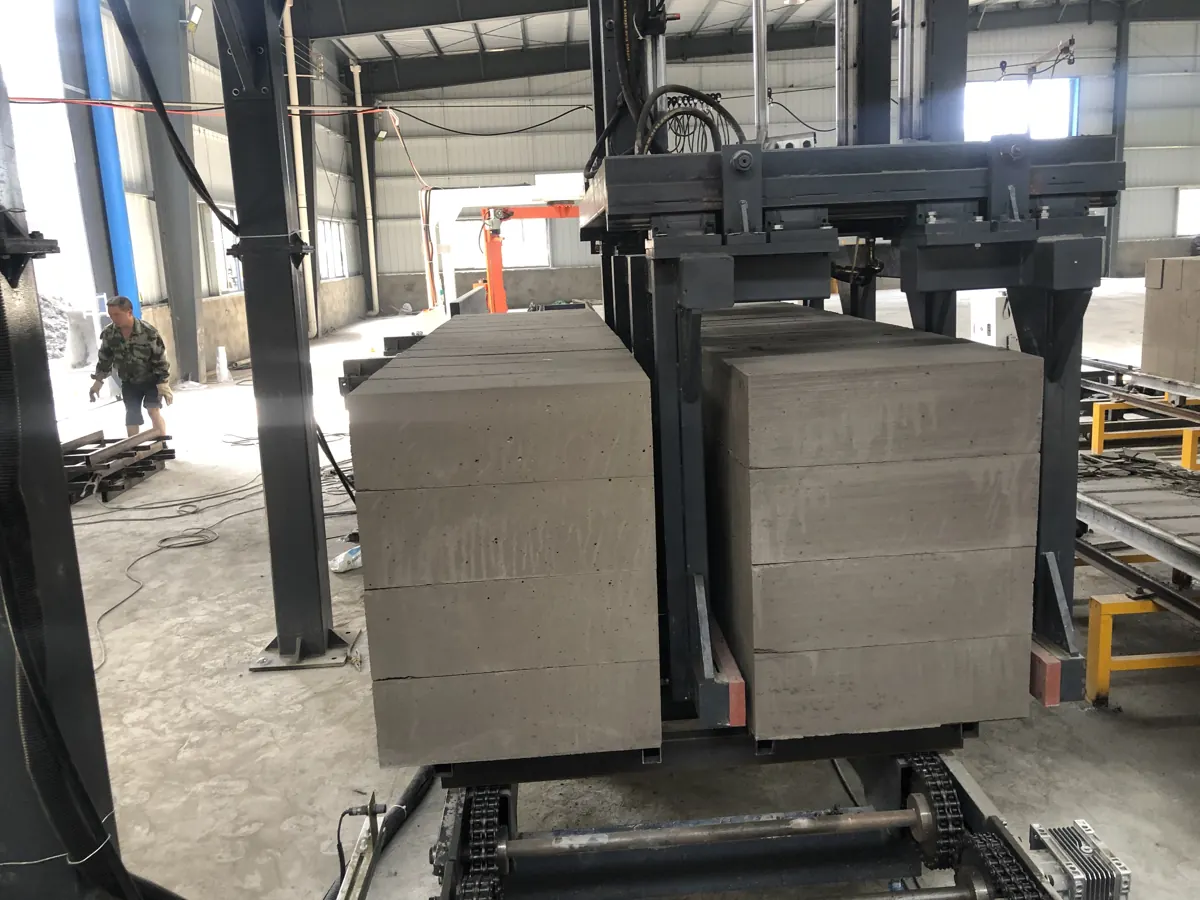
A casting shift and a product-inspection shift are often different. Give the batch a permanent ID and record its recipe revision, material deliveries, mould/base IDs and casting time. Carry that ID into release, cutting, inspection and test specimens. Do not create a new batch identity just because a different crew takes over.
This matters when a supplier changes, water correction changes or a body waits longer than planned. Without the link, a cutting defect found today can be assigned to the wrong material or crew. Our raw-material sample and supplier-change guide explains the incoming identity that begins this chain.
What are the essential shift fields?
| Record group | Practical entries | What the entry explains |
|---|---|---|
| Materials and mixing | Delivery IDs, actual weights, water correction, recipe revision, foam/mixing settings, fresh measurement | Whether the batch started from the selected baseline. |
| Casting and body release | Batch, mould/base, casting time, curing location, release time and body observations | Where material and mould capacity remain occupied. |
| Cutting and inspection | Product size, cutting start/end, sample IDs, accepted/rejected/pending counts and reason | What product passed through the station and its inspection status. |
| Equipment and interruptions | Station, exact alarm, stop/restart time, action and restart check | Lost operating time and the condition that caused it. |
| Handover | Unreleased bodies, held product, maintenance tasks and authorized setting changes | The next crew’s priorities and restrictions. |
Use setpoints and actual observations as different fields. A target water quantity is not proof that the quantity was delivered. An alarm reset is not proof that the underlying condition was corrected. Attach the observation that supports the entry.
Count accepted, rejected and pending product separately
For the same cut batch and counting unit: cut pieces = accepted pieces + rejected pieces + pieces awaiting a decision. Pending results are not accepted stock. Record the rejection reason so dimensional defects, handling damage and product-test failures do not disappear into one loss total.
Illustrative calculation, not a customer production result: a cut batch contains 1,000 blocks. Inspection accepts 930, rejects 30 and holds 40 for a later decision. Report 930 accepted, 30 rejected and 40 pending—not a 7% rejection rate. The undecided 4% has not failed or passed yet.
If that product is 600 × 200 × 100 mm, its nominal volume is 0.6 × 0.2 × 0.1 = 0.012 m³ per block. The accepted quantity represents 11.16 m³, rejected quantity 0.36 m³ and pending quantity 0.48 m³. These dimensions and counts are invented for the example. Keep each product size separate before adding volumes.
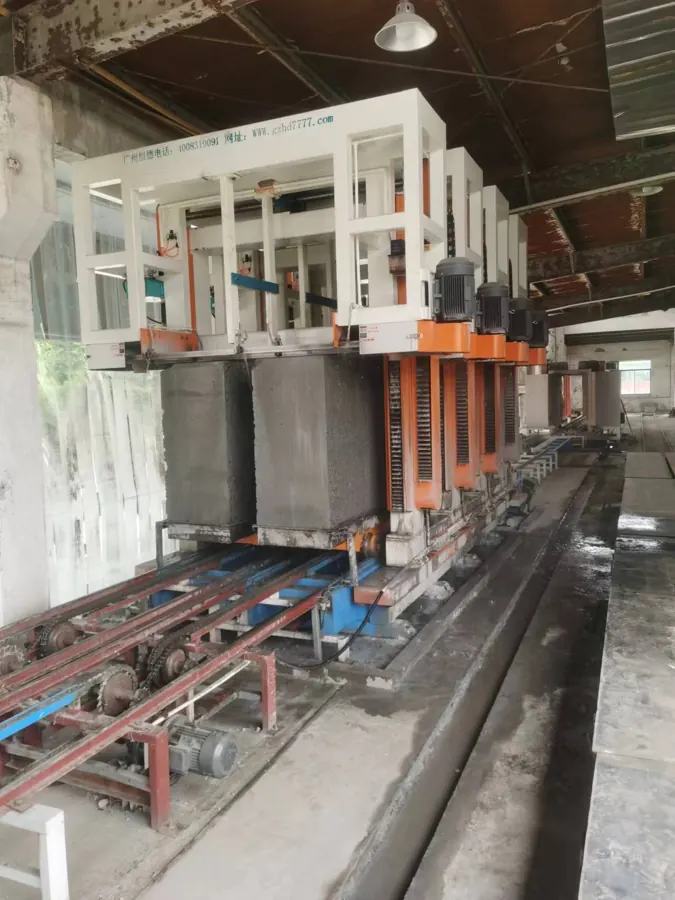
Record casting volume as a separate operating measure. Do not call the difference between fresh cast volume and nominal finished-block volume entirely “saw loss”: trimming, product dimensions, material/body changes and different measurement bases also affect that comparison. Follow the same batch through the selected block production line to locate the loss rather than estimating it from two unrelated shifts.
Use stock balance to check the dispatch figure
Closing accepted stock = opening accepted stock + newly released accepted product − dispatched accepted product, with transfers and documented adjustments listed separately. Use the same product and unit on each side. Held product has its own stock account.
Illustrative example: start with 1,000 accepted blocks, release another 3,000 and dispatch 2,500. The closing accepted stock is 1,500 blocks before other documented movements. If the physical count differs, investigate an unrecorded movement, duplicate release or incorrect product count. Do not change a production entry simply to make the inventory reconcile.
A dispatch truck can take blocks made on previous days. Conversely, today’s casting can still be curing tomorrow. Dispatch is a sales/logistics figure; settled batch yield is a production/quality figure. Both are valuable, but they answer different questions.
Turn downtime into a specific improvement
Record each stop once, with start and end times. If several stations stop during the same event, keep the station records but do not add overlapping intervals twice when calculating whole-line downtime.
Operating-time fraction = (scheduled observation minutes − whole-line stopped minutes) ÷ scheduled observation minutes. In an illustrative six-hour observation with 45 stopped minutes, the fraction is 315 ÷ 360 = 87.5%. This reports time availability, not product quality or a HENGDE performance guarantee.
Combine that time figure with the station reason. “Waiting for empty bases” points to circulation or downstream release. “Cutter waiting for ready bodies” points upstream. “Discharge occupied” points downstream. Compare a normal batch with the affected batch before changing machine settings. The production record should lead to a defined action, not just a lower daily total.
Finish with a handover the next crew can use
Identify each held batch, its location, the next measurement and the person responsible. List equipment that remains unavailable and the authorized settings to use after restart. The Hunan customer project provides a real block and handling-equipment reference. HENGDE’s commissioning and operator training connects these records with the delivered line and the operating team.
Make Your Shift Record Useful for Improving Production
Send one normal batch, one abnormal batch and the associated station times. HENGDE will use the comparison to identify the process or equipment review needed.